Your Writing Container
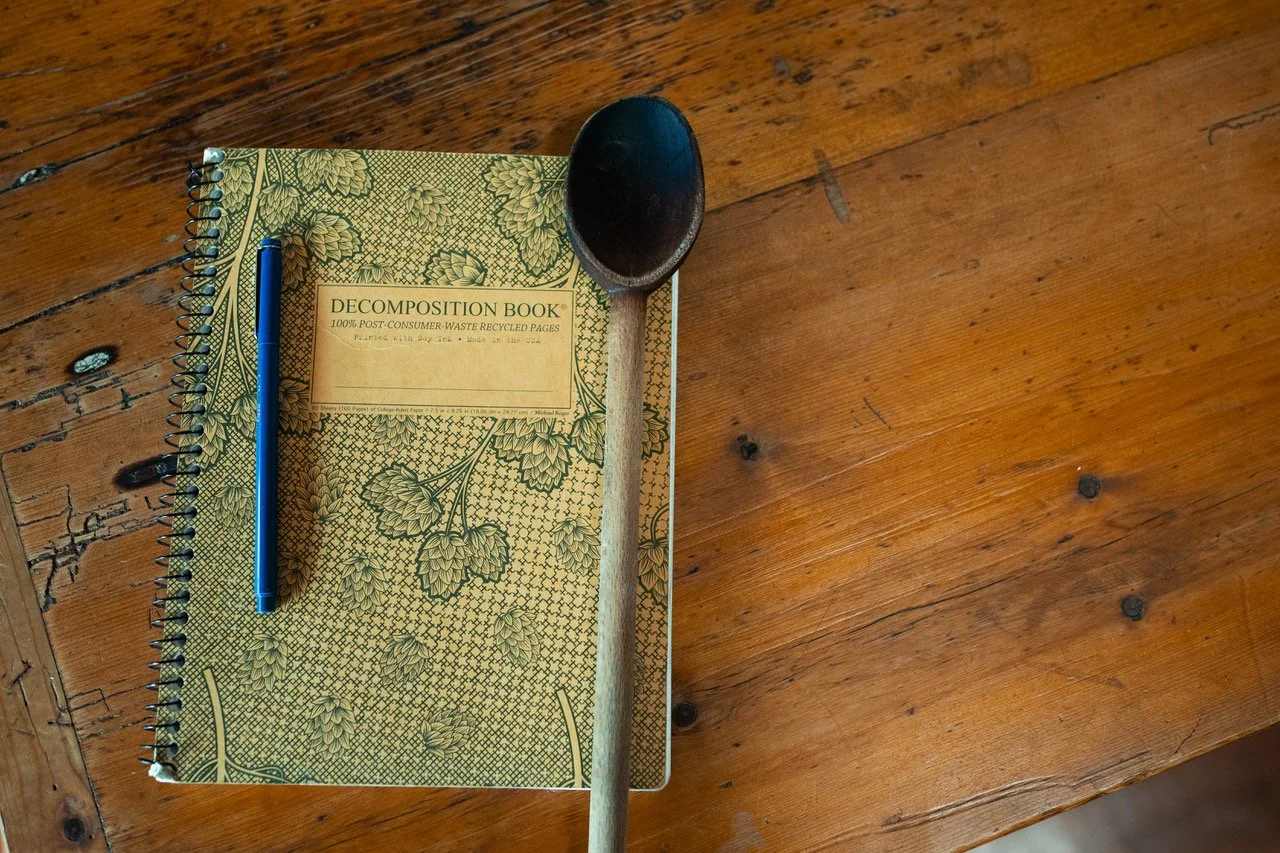
A spiral-bound Decomposition notebook is one of my preferred writing containers; it’s pictured here with a well-worn wooden spoon, probably my favorite kitchen tool. Photo by Dorka Hegedus
“What’s your writing container?” an editing client once asked me. She wanted to know what “paper” I use when I write and how I store my writing so I know where to find it. Every writer figures out the container that works best for them and the project at hand. Here’s how I (mostly) do it:
When I’m working out ideas or doing stream-of-consciousness writing, I write with a ballpoint pen in a spiral-bound notebook. My favorite pens are blue Bic ballpoints, but any ballpoint will do. (A talented writer friend believes a pencil is better for unlocking memory and creativity.) Decomposition makes my favorite notebooks, but I also grab whatever partially used castoffs my family generates.
For more serious writing, and especially for writing I want to be digitally searchable, I type on my laptop. If I’m at home, I use a large external monitor for ergonomics. I also love writing with just my laptop in cafés. I currently have an Apple MacBook Pro. Most of the time, I use Microsoft Word 365 word processing software. I like to use Google Drive for collaborative work.
During the writing of the book I’m currently revising, the project became unwieldy and surpassed Word’s organizational limitations, so I migrated everything over to a book-writing software called Scrivener for a while.
I have students and clients who like to work in Evernote and Pages. Some people write in the Notes app on their smartphones. One student who didn’t know how to use word processing software wrote all his stories as emails to himself.
Sometimes the only container available is the tried and true cocktail napkin. Don’t let perfect be the enemy of the good.
It may take time to find the ideal container for your stories. Allow yourself some trial and error, but not to the detriment of progress. Putting words on the page—whatever form the page takes—is the main thing.
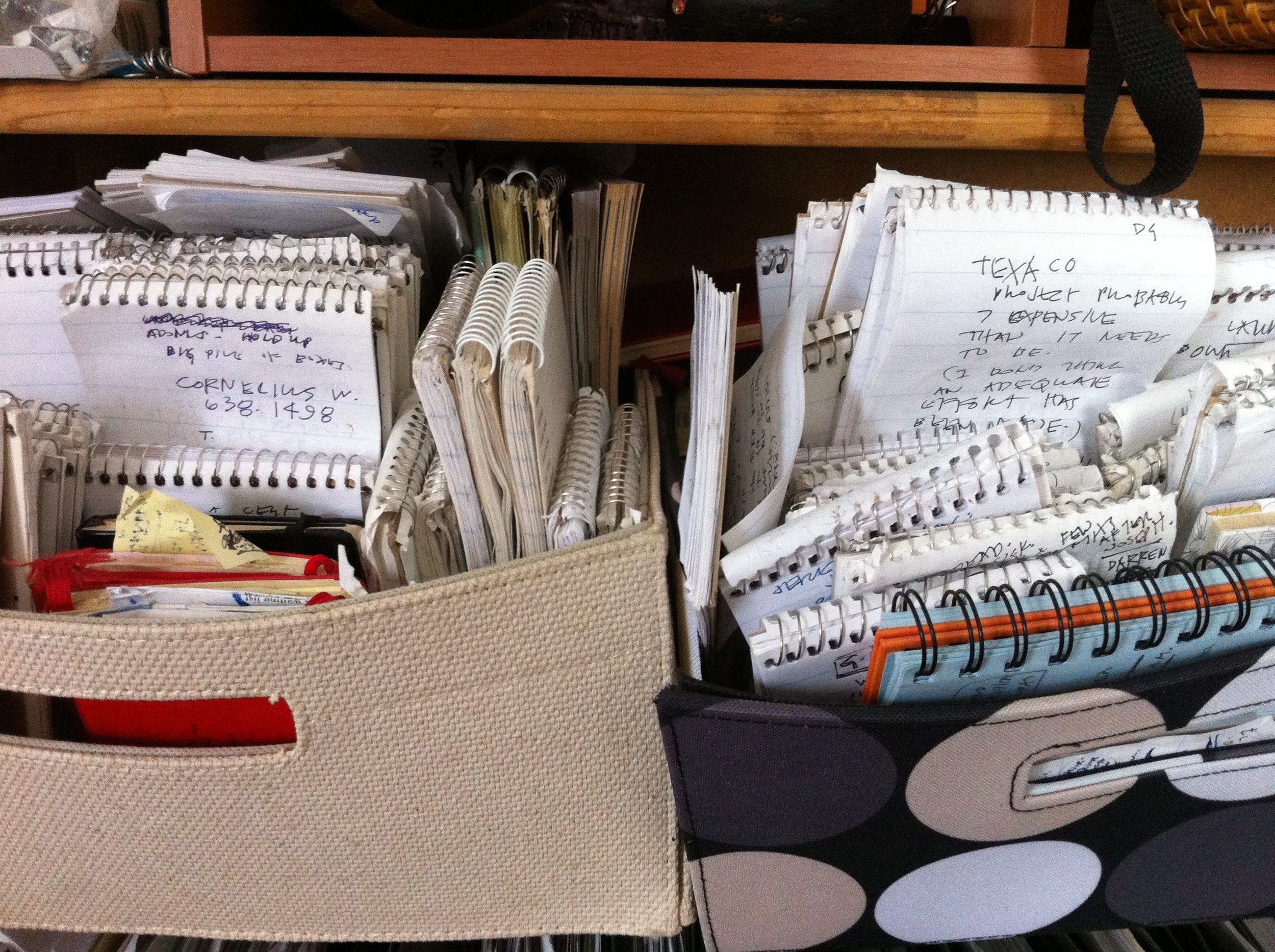
A friend’s writing containers stored in writing containers.
How my life story writing students answered the question, What’s your wrting container?
I like to scribble in pretty notebooks and then transfer to a Google Doc.
I was an MS Word user until my work switched to Google, and now I'm a Google Docs user.
Dictation on my iPhone through the Notes app.
I write on my laptop. I keep story prompts in blank-page, hardbound books. I tear out pages I no longer need.
I write in tons of journals and often make notes in the Notes app when I’m away from home/traveling. Then I write on the laptop and keep all my edited versions.
I sit down with my iMac and start with what is floating around in my head.
Post-its and notebooks; Substack posts and life stories in Pages.
I don’t use paper at all. I use MS Word, which I turn into PDFs, and I use Notes to contain my ideas. I have a “Life Story” file on my computer desktop and back it up on a thumb drive.
Journals and notes I take in spiral notebooks of various sizes.
My computer for writing because I can’t read my own writing, and arthritic hands get stiff. Notebooks from Amazon for my daily pages about anything and everything per The Artist’s Way.
My writing container contains the draft chapters of my book. These are separate from my research files and ordered by chapter number.
Existing writing container: scraps of paper. New container? Not sure yet.
I use a local copy of Word, so I have everything stuffed into a single directory (with subdirectories for side quests). I do try to consolidate shorter pieces written for the class into longer chapters when called for.
Writing container: Primarily my desktop computer using MSWord. But while traveling or when struck by a thought, I put memories and thoughts into an email on my phone and email it to myself as a reminder to address in the future.
Laptop, file folders, old journals, a haphazard binder sorted by family member, the Cloud.
I write with a ballpoint pen and a composition (or Decomposition) notebook. I write first there and then “soft edit” as I transfer to a Word document on my Apple computer. I file it in a “current writing” folder. For my memoir, I take this and put it in my Scrivener memoir file. I edit and move around this piece and use AI to edit it again. Then periodically I get it into my whole Word doc for the memoir, where I can edit it more in context again (many times usually).
Laptop and spiral notebooks.
I use an iPad with the Pages app, and I store my files in the Cloud.
I jot down brief thoughts in pencil on a blank piece of paper. I then write the story in pencil in a steno notebook. I then type out the story on my laptop, editing as I type. I file all my writing in a single Word file.
What’s YOUR writing container?
(Comment below.)