Q&A with Sharon Sheltzer, author of “Lady of the Waves: Love in the Time of Climate Change”
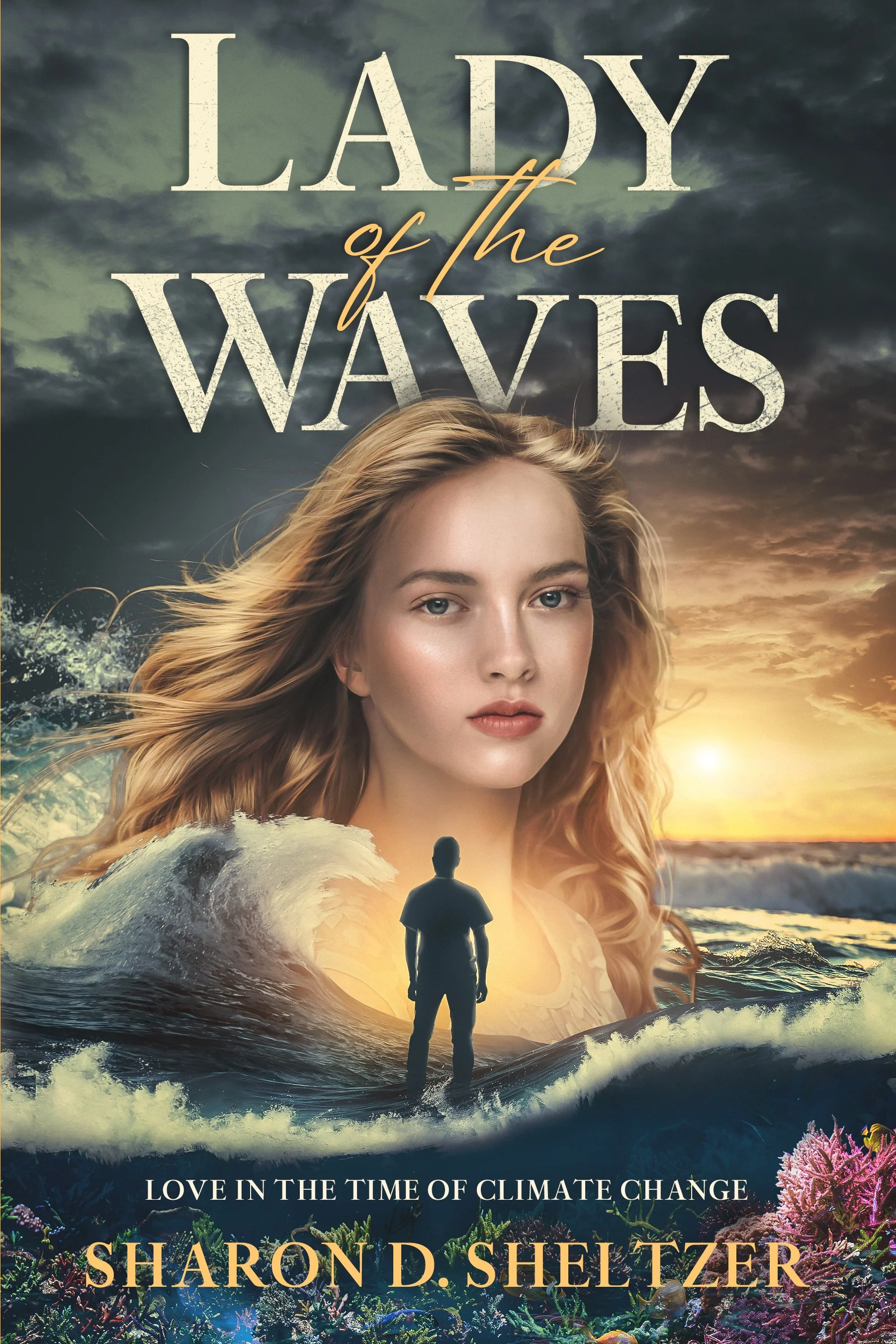
Sharon Sheltzer and I met at a writers’ conference when she was gearing up to write her memoir, Woman Overboard!: A Splash of Insight Into Sleep Deprivation and Psychosis. I provided editorial insights on that work, and she took my life story writing class for a couple of semesters, but I may have been the true student in that relationship. As designer, formatter, and publisher of Woman Overboard!, Sharon was the first author I ever knew to DIY their own book production. You might say she was my original inspiration in independent publishing.
Sharon, a retired architect, took a different path with her current book, Lady of the Waves: Love in the Time of Climate Change. It’s a YA novel whose Finnish protagonist survives the Indian Ocean tsunami in 2004 but loses her parents, her brother, and any means of returning to her former life. This time around, Sharon found a traditional publisher in 12 Willows Press, a Maine-based operation that specializes in books with a strong sense of place and connection to the natural world.
Lady of the Waves is the first book of what will be a three-part series.
I spoke with Sharon about the thriving genre of climate-change storytelling, how she found a traditional publisher, becoming a writer in retirement, and author-driven book marketing.
QUESTION: What was the seed of inspiration for this story?
SHARON SHELTZER: It started all the way back when I was in my twenties, studying architecture, and I heard about an architecture student who won a prize for designing the Vietnam War Memorial in Washington, DC. I was in DC at that time, and I thought, Oh, wow, she has her career mapped out for her, having won this huge competition so young.
Fast forward many years later. NPR featured a story about another young woman, an engineer, who had designed and won a contest for an underground water catchment system in Thailand. I’m interested in how one event—in these cases, winning a competition—can impact your career trajectory. Then came the tsunami in 2004—sometimes it’s called the Boxing Day tsunami—and I wondered if that engineer’s project was ever implemented. Both were creative young women making a difference.
Once I saw videos of the tsunami, I knew that was the starting point of my story. I wanted to begin this book with an exciting scene, and tsunamis are about as exciting as you can get. I also knew I wanted to address climate change.
Back in 2006, when Al Gore put out his movie on climate change, An Inconvenient Truth, that’s when I started to tune in to the effects of climate change. I liked the idea of writing a story about the coming of age of climate change—that era when people like me really started to learn about it—and the coming of age of my characters.
It was brave of you to write characters from cultures vastly different from your own, Finland and Thailand.
The characters came about because we were a host to a Finnish exchange student, Ida. We were very close to her, and we spent time in Finland and met her family. It was a very impactful trip for us. Ida lived in this small town like the one that’s in the book, and the cabin in the book is like her great-aunt's cabin.
We also hosted a boy from Thailand. I haven't been to Thailand, but Google really helps. I do a lot of research that way.
And then we used to live in San Francisco [another setting in Lady of the Waves], and I have two boys. I identify with boys and all the things they go through, including bar mitzvahs, which is in the book.
Food has a prominent place in this book, which I appreciated. I could smell those cookies Aallotar makes in the cabin.
My neighbor baked some amazing cardamom cookies for my book launch event. They were spectacular.
That's such a good idea. I like luring people to book events with baked goods.
I don’t want to give any spoilers here, but I’ll just say that I had a hard time with the beginning of your book, emotionally speaking. I couldn’t put it down, but it made me sit in some uncomfortable spaces. For one, it made me face climate change. As the author, you were sitting in that uncomfortable space yourself for the duration of writing the book. It sounds like climate change has been a passion of yours for a long time. Does that have to do with your design experience?
Yes, it does. My emphasis as an architect my entire career has been on green, energy-efficient building design. I've been interested in that topic since architecture school. In fact, my thesis was an entire college where you would learn about these things. And especially after watching that Al Gore movie, my mind just became more open to the broader aspects of climate change. I'm an outdoor person. I get so much pleasure from being outside, and I just hope that our children and our grandchildren will get to enjoy these things too.
Tell me about your transition from architecture to writing.
When I retired a few years ago, I wondered, What will I do with myself? I had such a creative career, and I had always enjoyed reading, but I never thought I would be able to write anything. It was a big challenge for me. My very first time at the Central Coast Writers’ Conference, where we met—I gave that to myself for my birthday. After that, it took me about a year and a half to figure out that writing a book was what I wanted to do.
At that time, I wasn't thinking about climate change. But after I wrote my memoir and got a little bit of experience writing, I knew I wanted to write a novel. And then I kept going. I came to realize that I wanted to make a difference in this next phase of my life. It felt important to do something useful for the environment.
I mentioned that it was difficult to face climate change through your story and characters, but I was surprised—and I’d like your potential readers to know—that there’s a lot of hope embedded in the story of Lady of the Waves.
I wanted to make sure that there was. Until maybe five years ago or so, there wasn't a lot of climate-related literature that was hopeful. Most of it was dystopian. And although some people found that interesting to read, for the most part, people shut down. They did not see a path forward or how they could do anything about it. But then, as I was beginning to write this book—without me even realizing it at the time—there was this movement starting of more hopeful climate fiction.
There have been studies in the UK, the United States, India, and other places that have looked at what happens when people read hopeful climate fiction and how that affects their actions. The result is that it’s very positive. So I feel like I'm part of a mini movement to help people find a pathway through what is a pretty devastating situation.
There's been a tipping point. Solar energy, for example, is less expensive than using oil right now. The free market is taking over, and nonprofits and individuals and scientists are continuing to come up with innovative solutions and moving forward, regardless of whether the United States government is a proponent of climate action.
Capitalism is going to win, right? Companies will get on board because it's good for them?
My second novel is all about this, about the oil companies.
I’m impressed that you’re already working on your next book! What would you say to people who are thinking about beginning to write in their retirement years but wondering whether they're too old?
There is this architect—what is his name? Schwartz. He started his big career when he was in his late fifties. There are so many people who have done big things later in life, including writers. I'm certainly not the first person to start writing in my sixties. I would say go for it; absolutely go for it. But if you’re serious, you have to belong to a writing group that provides critiques.
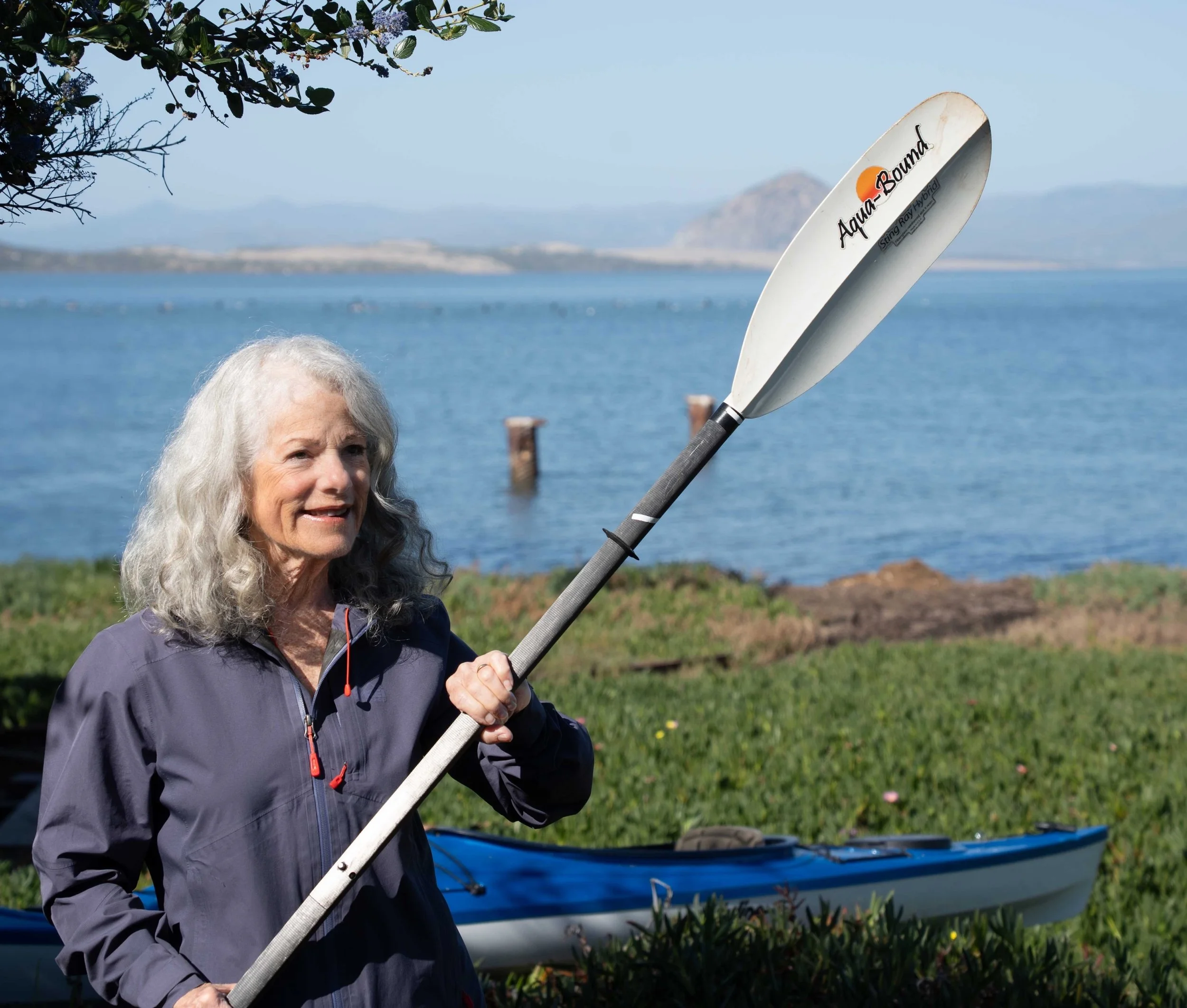
“I get so much pleasure from being outside, and I just hope that our children and our grandchildren will get to enjoy these things too.”
—Sharon Sheltzer
I'd like to talk about process. So, you had this idea for a book. How long was it from the first time you put words on a page until publication?
It was a lot longer than I would have hoped for. I think I wrote the outline and the basic book in about eight months. And then I spent over a year revising it, reading chapter by chapter to my writing group, getting their critiques, rewriting each chapter. Then it was edited, and that took some time.
I decided to see if I could find a publisher. First I tried to find an agent; I think I sent out about ten requests and didn't get any positive responses. I signed up for Duotrope, which is how I found a bunch of small publishers that didn't require an agent. I did a deeper dive and found some small publishers that specialized in environmental themes. So then I sent my book out to the eight or ten small publishers that seemed like a good fit for my story.
How long did it take for those publishers to get back to you?
I didn't have to wait too long, like six weeks or two months, before I heard the first acceptance from a small publisher. While I waited, I reviewed their book lists and even ordered one book to read from each publisher. I wanted to see what kinds of books they produced.
While I was doing that, I got another acceptance from a new environmental publisher. I had to make a decision. I knew the environmental publisher would take longer to get it out; the other one had been around for a number of years, and they had their system down. But Steven Long from 12 Willows Press was new, and it was risky.
How did you decide?
I contacted some people who knew him and had some discussions and found out a little bit more about him and the company. Ultimately, I decided to go with him. The contract we eventually settled on had an outside timeline of two years, which was a long time already, and then he delayed it even more. He had taken too many books on, and he wasn't able to do what he wanted to do for marketing. He likes to put out one book a month. I would say it took about two and a half years from the time I submitted it to him.
Two years is a pretty standard timeline for book production in traditional publishing. What parts of production did 12 Willows do for Lady of the Waves?
They hired a professional company to do the cover design. He appreciated the fact that my book was pretty well edited before it got there, but he did additional editing, and he was very good at it. And then he did a book trailer and published it on his website. He also posts on social media and confers on marketing ideas, but he was very clear that I would have to do the lion's share of the marketing.
From inception to publication, then, it was about . . .
It was about five years between the time I put pen to paper and when it was actually published.
You had to have been persistent to write the first version of the manuscript in eight months. What is your process like? Do you write every day, and how long do you work when you sit down to write?
I don't write every day because some days I just have other things to do, and I don't write at a specific time. And I don't set any goals because I'm motivated by enjoying the process.
I started out with an outline. There were one or two things that didn't make sense, but I thought, Well, I'll write through them, and I'll figure it out. For example, I did not know when I started whether there was any relationship between tsunamis and climate change. At one point, I said, I'm afraid to do this, but I'm going to look it up. And I looked it up, and it was like, Score! There is!”
When I started to write a chapter, I first wrote what the chapter was going to be about, a few paragraphs. And then I wrote the chapter. It would maybe go in a slightly different direction as I wrote, but I basically knew where I wanted to go. I might work on a chapter for two or three days. But then there's so much revision.
Tell me about your writers’ group.
It's the CWW, Cambria Writers’ Workshop. We have about twelve members. It's all over Zoom. At first I was overwhelmed by how much critiquing went on, and by how professional the critiquing was, so I didn't say too much right away. I was a guest for at least six months, if not closer to a year, before they voted on letting me in.
You said that your book was edited before you sent it out to publishers. What level of editing was that?
I did some research and found a good person to do a line edit. It was developmentally fleshed out at that point.
If you have a good critique group, it can serve as developmental editing. Was that your experience?
Yes, it was.
I’d like to know how you planned for your launch and what that's been like.
Because the book spent more than two years with the publisher, I had way too much time on my hands to fret about marketing. I read so many things about marketing and accumulated so much information, and I had to pare it down to what I was realistically going to do. I wrote myself a three-page list. I didn't want to spend a tremendous amount of money because this is all a money-losing proposition, publishing a book. I mean, just paying for the line editor, I was behind $1,000. So I limited it.
On the other hand, I was willing to spend a lot of time on marketing. I created all kinds of flyers, I sent press releases to newspapers, I hounded people to write reviews. I went on Facebook and tried to join groups to see if I could get ARC readers. It’s important to read organizations’ websites, get on mailing lists, review others’ books, respond with comments and reviews, attend conferences, etc. Put yourself out there and make connections.
I'm trying to get my books out to the local bookstores. In fact, that's one thing I have to do today: drop more off at the bookshop here in Los Osos. They have sold out.
That's fantastic. And they're selling it on consignment?
Yes.
What has been the most impactful outreach for you?
I have sold a number of books by sending out personal emails, and boy, did that take a long time to cull through my email addresses.
Instagram and Facebook, too. Some of my friends reposted my announcements and posted their own messages. There was a certain amount of friends helping friends in the climate arena. It helps that there's a purpose behind my book. I was able to make connections within the Climate Fiction Writers League, and they invited me to team with another author and write a piece for their newsletter, which reaches several thousand readers. So, starting out with the people you know, especially if you have friends in related fields—that’s really helpful.
I reached out to Dave Congalton, host of Hometown Radio on our local radio station, and he interviewed me for an hour in July, featuring my book launch.
I should also mention Reader Views, an editorial review and awards business for authors who are self-published or published by small presses. They gave Lady of the Waves a five-star review, posted on numerous venues like Book Bub and Goodreads, and will consider the book for further recognition later this year. This was another one of my marketing efforts that paid off.
Sending out my press release got me an upcoming feature (August 27, 2026) in New Times, a local news and entertainment newspaper, so writers, put yourself out there.
Do you have a least favorite part of promotion?
Yeah, feeling like I’m bothering people, like sending email reminders to people who promised to write a review or to read the ARC. I did a certain amount of that. And then I thought, Okay, I've done this three times. I'm not bothering them anymore.
How about your excitement level for promotion? Do you still feel connected to Lady of the Waves now that it has been more than two years since you finished writing it, and you’ve moved on to writing your next book?
I've learned so much as a writer since this first novel that part of me is a little squeamish about it. I have to get past that feeling. As I get a little bit better at writing, I have to be okay with the fact that whatever I published in the past, I could do better now. Isabel Allende said that she can't even remember the last book she wrote when she gets lost in the book that she's writing. But this is my first fiction book, so it's still pretty exciting.
Certain little things keep me connected to it. I got an email a couple of days ago from a friend of mine here in Los Osos who went to the book launch. After the book launch, she met up with some relatives who were in town for a wedding. One of them was from Thailand. When my friend met him, she said, “Oh, that's funny, I was just at this book launch. A friend of mine wrote a book about the tsunami in Thailand. Do you have any experience with that?”
He told her that he had met his wife in Thailand; they had built a green hotel in a town right outside of Phuket. Then the tsunami came, and they survived. Phuket got destroyed, but they were up in the hills. And then he said, “After the tsunami, we created nonprofits and orphanages for all the children who had lost their parents.” This is part of the plotline of my book.
What a coincidence! That hits on so many points in your book.
I couldn't believe the serendipity. My friend gave this man my book, and he took it back to Thailand with him.
Final question. I work with a lot of people who are writing later in life. Some of them, like you, have had successful careers, and then they decide to write a book and actually produce a manuscript, which is no small feat. But then they get discouraged with book production and publishing. People are surprised, I think, that the publishing piece is a whole other job. They’re shocked to learn that there isn’t much money in publishing, and that it’s hard work to find readers. After you’ve been down that road once, you accept it, but some people never get through the first time because they get so discouraged. I'm wondering if, as a two-time author, you have anything to say about that.
Well, if you self-publish, I don't think Amazon is particularly helpful to authors. It can be challenging. And then when you don't sell as many books as you thought you would, that’s challenging too. Bottom line: If you really like writing, just do it because you love it. You can enjoy the accomplishment of having created a big project and just appreciate the joy you got from writing it.
I don't expect to make any money at all. Would it be great? Yeah, but mostly because it would be a sign of success. I don’t do it for the money.
Learn more about Sharon at www.sharondsheltzer.com.